draft-Public–Private Partnership
Share
-

Public-private partnerships have become one of the development financing instruments Indonesia relies on most when infrastructure needs far exceed the state’s fiscal capacity. The concept goes by three often-interchanged names, KPS, PPP, and KPBU, and is formally governed by Presidential Regulation No. 38 of 2015. This article explains the definition, objectives, scheme types such as BOT and BOO, priority sectors, and its relevance to the food sector. The context is tangible: Indonesia’s national food security budget reached IDR 139.4 trillion in 2025 (Ministry of Finance/DJPB), yet public investment alone is not enough without a role for the private sector.
For readers researching this topic, the most common source of confusion is terminology. “KPS” (Kerjasama Pemerintah-Swasta, or government-private cooperation) is the older term. “PPP” (Public-Private Partnership) is its international equivalent. And “KPBU” (Kerjasama Pemerintah dengan Badan Usaha, or government cooperation with business entities) is Indonesia’s current standard term, in place since Presidential Regulation 38/2015 replaced the earlier regulation. All three refer to the same concept.
What Is a Public-Private Partnership (PPP/KPBU)?
A Public-Private Partnership (KPBU) is a cooperation between the government and a business entity in the provision of infrastructure for the public interest, with risk shared among the parties. In Indonesia, the scheme is known by three equivalent terms (KPS, PPP, and KPBU) and is governed by Presidential Regulation No. 38 of 2015, covering sectors ranging from transportation, energy, and drinking water to health and education.
The official definition referenced by the Directorate General of State Assets (DJKN) at the Ministry of Finance emphasizes three key elements: the cooperation serves the public interest, follows specifications set by the project’s responsible authority (a Minister, Regional Head, SOE, or regional SOE), and draws partly or wholly on the resources of the business entity while observing risk-sharing. The core idea is simple: the state needs infrastructure, the private sector has capital and operational expertise, and the two share risk in a structured way.
The shift in terminology from “KPS” to “KPBU” is not merely cosmetic. It aligns with global Public-Private Partnership practice, which places risk-sharing, government guarantees, and project feasibility at its foundation. The equivalence of the three terms is as follows:
| Term | Origin | Usage context |
|---|---|---|
| KPS (Kerjasama Pemerintah-Swasta) | Indonesian (older) | Used before Presidential Regulation 38/2015; still appears in older literature |
| PPP (Public-Private Partnership) | International (English) | Global and multilateral context |
| KPBU (Kerjasama Pemerintah dengan Badan Usaha) | Indonesian (official) | Standard terminology since Presidential Regulation No. 38 of 2015 |
Source: DJKN, Ministry of Finance (2026); Presidential Regulation No. 38 of 2015.
Objectives and Benefits of Public-Private Partnerships
Why does the government need to bring in the private sector rather than build on its own through the state budget (APBN)? The answer lies in budget constraints and the need for efficiency. Indonesia faces a large infrastructure financing deficit while its fiscal space is limited. This is where the PPP/KPBU scheme offers a way forward.
The main benefits of the public-private partnership scheme include the following:
- Easing the state’s fiscal burden. The initial investment capital is borne partly or entirely by the business entity, so the state budget can be allocated to other priorities.
- Transfer of expertise and technology. The private sector brings technical capability, project management, and innovation that speed up delivery.
- Measured risk-sharing. Construction, operational, and demand risks are allocated to the party best able to manage them.
- Higher-quality public services. Long-term contracts bind providers to agreed performance standards.
- Faster development. Strategic projects can proceed without waiting for the annual budget cycle.
For the private sector, the appeal lies in long-term revenue certainty, whether through user tariffs, availability payments, or Viability Gap Fund (VGF) support from the government. In other words, the scheme is designed so that both sides share an interest in keeping the project running.
Forms and Schemes of Partnership
The PPP/KPBU model does not come in a single form. The choice of scheme depends on who owns the asset during the concession period and whether the asset is transferred back to the government. The three most common forms in Indonesia are BOT, BOO, and BLT.
- BOT (Build-Operate-Transfer): the business entity builds the facility, operates it during the concession period to recover its investment, then transfers the asset to the government at no additional cost once the concession ends. This is the most common scheme for long-term infrastructure.
- BOO (Build-Own-Operate): the business entity builds, owns, and operates the project permanently, with no obligation to transfer the asset. It suits projects whose business model is viable on its own.
- BLT (Build-Lease-Transfer): the business entity builds and leases the facility to the government for a set period; ownership passes once the lease ends.
Beyond these three, there are also variants such as BOOT (Build-Own-Operate-Transfer), BTO (Build-Transfer-Operate), and RUOT (Rehabilitate-Upgrade-Operate-Transfer). The main difference lies in the point at which ownership is transferred, as summarized below:
| Scheme | Asset ownership (during concession) | Transfer to government | Suitable for |
|---|---|---|---|
| BOT | Private | Yes, after the concession ends | Long-term infrastructure with strategic transfer |
| BOO | Private (permanent) | No | Projects with a business model viable without long-term subsidy |
| BLT | Private (during lease) | Yes, after the lease ends | Public facilities intended for government operation |
| BTO | Transferred earlier | Yes, immediately after construction | Projects intended for government operation from the outset |
Source: DJKN, Ministry of Finance (accessed June 2026).
Priority Partnership Sectors in Indonesia
Presidential Regulation 38/2015 specifically governs the PPP/KPBU model for infrastructure provision. The sectors covered include:
- Transportation: toll roads, ports, airports, terminals, and railways.
- Energy and electricity: power plants, transmission, and renewable energy.
- Water resources: irrigation and drinking-water supply systems (SPAM).
- Telecommunications and informatics: including digital connectivity projects such as Palapa Ring.
- Social infrastructure: hospitals, education facilities, housing, and waste management.
Here an important clarification is in order. The primary food and agribusiness sectors are not explicitly listed as PPP/KPBU sectors under Presidential Regulation 38/2015. The scheme’s scope covers food-supporting infrastructure, such as irrigation, farm roads, or storage facilities, which may be proposed and approved by the National Development Planning Agency (Bappenas) if they meet the criteria. To encourage private investment directly in the food chain, the government instead uses separate policies, such as issuing green bonds and designating food-estate National Strategic Projects (PSN), rather than the PPP/KPBU scheme itself.
As an illustration of a successful PPP/KPBU project outside the food sector: the Umbulan Drinking Water Supply System (SPAM) in East Java delivers drinking water across five regencies and cities, with an investment value of around IDR 4.5 trillion, while the Palapa Ring project became the first telecommunications project structured on availability payments, with an investment value of around IDR 7.6 trillion and fully operational since October 2019 (Ministry of Finance PPP Portal).
How PPP/KPBU Differs from the Nucleus-Plasma Partnership Model
Because the food sector does not fall directly under the PPP/KPBU scheme, Indonesian agribusiness follows a different partnership model: the nucleus-plasma (inti-plasma) pattern, governed by Minister of Agriculture Regulation No. 13 of 2017 on Livestock Business Partnerships. Both are called “partnerships,” but their actors, objects, and legal bases differ. Distinguishing between the two matters so that discussions of the private sector’s role in food are not misconstrued.
| Dimension | PPP/KPBU (Presidential Regulation 38/2015) | Nucleus-Plasma Partnership (Permentan 13/2017) |
|---|---|---|
| Principal legal basis | Presidential Regulation No. 38/2015 | Permentan No. 13/2017 |
| Parties involved | Government + business entity | Nucleus company + farmers/breeders (plasma) |
| Object of cooperation | Public infrastructure | Agribusiness production process |
| Nature of risk | Shared government-private (VGF and guarantees available) | Jointly borne; the nucleus bears market risk |
| Financing mechanism | User tariffs, availability payment | Offtake contracts, farm inputs from the nucleus, buyback price |
| Government role | Principal party granting the concession | Facilitator/supervisor via the Ministry of Agriculture |
Source: DJKN, Ministry of Finance; Permentan 13/2017 via the Ministry of Agriculture.
Under the nucleus-plasma pattern, the nucleus company provides livestock production inputs (sapronak), technical guidance, and a marketing guarantee; plasma farmers carry out the rearing and sell their output back to the nucleus at the contracted price. This model forms the backbone of agribusiness partnerships on the ground, and provides essential context when discussing how companies work with smallholder farmers. For readers who wish to explore this system further, the food partners ecosystem sets out how livestock partnerships work in greater detail.
Why Is Private-Sector Partnership Important for National Food Security?
The urgency of the private sector’s role in food is read most clearly from a single figure: Indonesia’s stunting prevalence still stood at 19.8% in 2024 (SSGI 2024, Ministry of Health). That means nearly one in five Indonesian toddlers experiences chronic malnutrition. The figure has indeed improved, down from 21.5% in 2023, and sits below Bappenas projections. Yet reaching the national target of 14.2% by 2029 still requires accelerated nutrition interventions focused on increasing animal-protein intake.
The sustained decline in stunting reflects both progress and unfinished work.
| Year | Stunting prevalence | Notes |
|---|---|---|
| 2023 | 21.5% | SSGI 2023 |
| 2024 | 19.8% | SSGI 2024 (announced by the Ministry of Health, 26 May 2025) |
| 2029 target | 14.2% | RPJMN 2025-2029 |
| 2045 target | 5% | Golden Indonesia 2045 Vision |
Source: Ministry of Health / BKPK (2025).
On the financing side, the government allocated IDR 139.4 trillion for food security in 2025, covering mechanization, agricultural digitalization, quality seeds, irrigation, farm roads, and storage facilities (Ministry of Finance/DJPB). The figure is large, but it does not stand alone. Official documents from the Directorate General of Treasury (DJPB) explicitly note that the government is adopting innovative financing approaches, “such as issuing green bonds and collaborating with the private sector through Public-Private Partnership (PPP) schemes.” Private collaboration is thus positioned as a complement to public investment, not a substitute for it.
Case Examples of Partnership in the Agribusiness Sector
Because formal PPP/KPBU has yet to reach much of the food chain, corporate-government collaboration in agribusiness has developed in other forms. The nucleus-plasma pattern guarantees the absorption of harvests through offtake contracts; food-estate programs with PSN status involve business entities in developing large-scale food zones; and at the grassroots level, agri-food companies weave together collaborative ecosystems that bring corporations, local governments, and farming communities together. These models are not PPP/KPBU in the sense of Presidential Regulation 38/2015, but rather agribusiness partnerships that complement the state’s role. It is precisely in this arena that the private sector’s contribution to food security is felt most: in local economic empowerment, knowledge transfer, and market certainty for small producers.
Case Study: Corporate, Government, and Community Collaboration, Not a PPP/KPBU but Complementary
One point should be clarified from the outset: this section is not an example of a PPP/KPBU infrastructure project. PT Japfa Comfeed Indonesia Tbk, one of Indonesia’s largest agri-food companies, does not operate government PPP/KPBU projects. What is relevant in Japfa’s experience is the model of corporate-government-community collaboration: an agribusiness partnership ecosystem that complements, rather than replaces, the government’s formal partnership schemes. This position aligns with how the company frames Japfa’s collaboration in national food security, namely as a contribution that complements the state’s agenda rather than replacing its role. This is the perspective that underpins its approach.
An Ecosystem of Local Government, Corporations, and Village Communities
One expression of this cross-party collaboration has emerged at the village level. On 14 January 2026, Japfa Comfeed held an outreach session on developing food-security livestock ventures together with the Village Government and BUMDes (village-owned enterprise) of Harjowinangun, Godong District, Grobogan Regency, Central Java. The material covered livestock business opportunities, herd management, feed handling, and the sustainability of village-based enterprises, with village officials, the Village Consultative Body (BPD), and student community-service (KKN) participants in attendance.
This initiative, to be candid, is still at the planning and exploratory stage. No formal agreement or MoU has been signed, as confirmed by official village sources. Its value lies not in impact figures already realized, but in the pattern it offers: village government, a village-owned enterprise, a corporation, and a university sitting at one table to design a local livestock business. It is precisely this kind of pattern that makes multi-stakeholder collaboration relevant to food security from the ground up.
Industry-Academic Research Partnership
Another form of collaboration takes place in the research domain. Japfa’s partnership with the Faculty of Animal Science at Universitas Gadjah Mada (UGM) has run since 2003, an industry-academic relationship rather than a government assignment or PPP/KPBU scheme. On 29 April 2026, Japfa handed over a free-range layer facility to UGM, with an initial phase of 1,500 laying hens, serving as a living laboratory for research into sustainable livestock management based on the Five Freedoms principles (Trobos Livestock; Asian Agribiz, May 2026).
The partnership’s milestones stretch back a long way: the Teaching Farm Closed House (2017), a post-harvest laboratory and closed house for feed research (2019), and the free-range layer facility (2026). For the livestock sector, industry-research collaboration of this kind accelerates the transfer of knowledge from the laboratory to the field.
Socioeconomic Impact of the Partnership Ecosystem
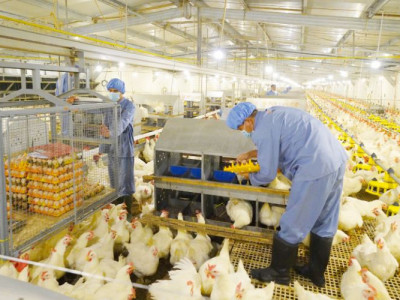
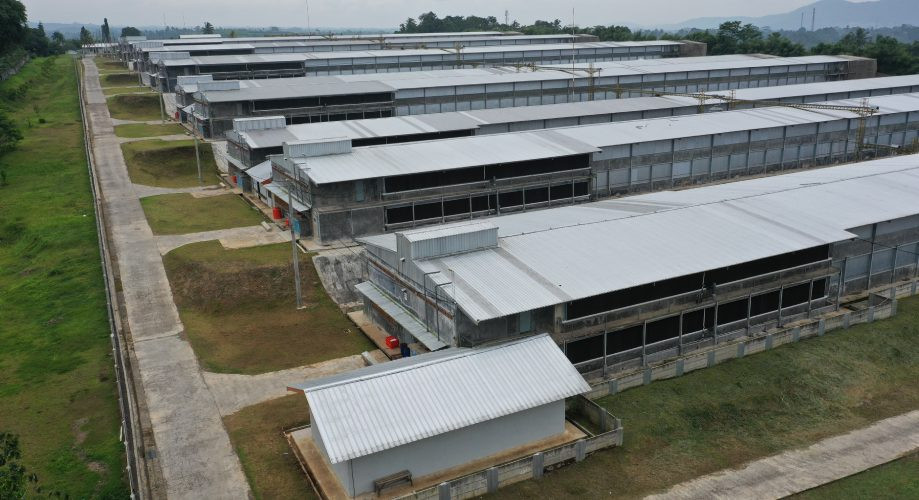
The backbone of all this collaboration is the network of partner farmers. Through cooperation with more than 8,700 partner farmers across Indonesia, as summarized in the Japfa Sustainability Report 2025, the company shows that collaboration among corporations, local governments, and smallholder farmers can sustain an inclusive protein ecosystem. Technical support from field extension officers (PPL), recommendation letters to banks for access to capital, and the conversion to closed-house barns, which reached nearly 100% in Java by the end of 2025, are concrete instruments of empowerment.
Grounded in the vision of “Growing Towards Mutual Prosperity,” this model affirms one thing: multi-stakeholder agribusiness partnerships can create a stable and sustainable business ecosystem, even without a formal PPP/KPBU framework. The state builds infrastructure and policy; the private sector closes the gaps in the production chain, technology, and community empowerment. In the end, both point toward the same goal.
FAQ (Frequently Asked Questions)
What are examples of public-private partnership projects in the food sector?
The food sector has few formal PPP/KPBU projects, because Presidential Regulation 38/2015 focuses on infrastructure. Corporate-government collaboration in food has developed in other forms: food-estate programs with PSN status that involve the private sector; nucleus-plasma partnerships (Permentan 13/2017) that guarantee the absorption of harvests; and corporate-village government-community collaboration ecosystems, such as the exploratory development of BUMDes-based livestock ventures backed by local government support.
What are the key regulations on public-private partnerships in the food (poultry) sector?
For general infrastructure, Presidential Regulation No. 38/2015 is the principal PPP/KPBU regulation. For livestock agribusiness, Permentan No. 13/2017 governs business partnerships under the nucleus-plasma pattern. Fiscal commitment is reflected in the 2025 food security budget of IDR 139.4 trillion, while green bonds and PPP schemes serve as instruments to attract private investment into the food chain (Ministry of Finance/DJPB).
Why is private-sector partnership important for Indonesia’s food security?
Two key data points. First, stunting remains at 19.8% (SSGI 2024, Ministry of Health), meaning nearly one in five Indonesian toddlers suffers chronic malnutrition, though this is down from 21.5% in 2023. The 14.2% target for 2029 demands accelerated animal-protein intake. Second, the government’s IDR 139.4 trillion budget (2025) is large, but reaching its goals requires private investment in supply chains, technology, and smallholder empowerment.
Public-private partnerships, in their various forms, are increasingly decisive for the progress of Indonesia’s development, both in physical infrastructure and in the food chain. The PPP/KPBU scheme governed by Presidential Regulation 38/2015 has proven itself in projects such as SPAM Umbulan and Palapa Ring. In the food sector, where a formal framework is not yet fully in place, the corporate-government-community collaboration model takes on a complementary role. The experience of PT Japfa Comfeed Indonesia, from a network of more than 8,700 partner farmers to joint research with UGM, shows how the private sector can strengthen a food ecosystem grounded in the principle of Mutual Prosperity, complementing the government’s role in achieving inclusive and sustainable food security.