draft-Food S
Share
-

Food security is the condition in which food needs are met, from the nation down to every individual, reflected in the availability of food that is sufficient in quantity and quality, safe, diverse, nutritious, evenly distributed, and affordable, so that people can live healthy, active, and productive lives on a sustainable basis.
Food security is not merely a matter of rice stocks or adequate food production. The concept encompasses the ability of every community, from urban centers to remote regions, to obtain sufficient, safe, and nutritious food every day, throughout the year, undisturbed by climate change, supply chain disruptions, or price volatility. In Indonesia, food security remains a strategic issue. Public consumption of animal protein still needs to increase, while the prevalence of stunting stands at 19.8% according to the 2024 Indonesian Nutritional Status Survey (SSGI). At the same time, dependence on imports for certain food commodities remains a challenge that must be addressed through stronger national production and food diversification.
This article examines, in comprehensive terms, the definition of food security according to the Food and Agriculture Organization (FAO) and Indonesian legislation, the four main pillars that support it, the current state of national food security, the government’s various efforts to strengthen the food system, and the importance of the private sector’s role in achieving sustainable food security.
Food security has now become one of the national priority agendas, in line with the target of realizing Indonesia Emas 2045 (a Golden Indonesia by 2045). Developing a superior workforce cannot be separated from meeting the population’s nutritional needs. Various government initiatives, such as the Makan Bergizi Gratis (Free Nutritious Meals) program and the Koperasi Desa Merah Putih (Red and White Village Cooperatives), demonstrate a commitment to expanding public access to nutritious, safe, and affordable food.
Even so, achieving food security cannot rest on the government alone. Most of the food value chain, from production, livestock farming, aquaculture, and processing to distribution and the supply of food products to the public, lies in the hands of business actors. For this reason, collaboration among the government, the private sector, academia, and the community is key to building a resilient, inclusive, and sustainable food system that supports national food security.
The Contribution of Agribusiness
The private sector plays a vital role in strengthening food security, particularly through agribusiness companies that manage the value chain from upstream to downstream. The “from feed to food” model enables quality control, supply continuity, and distribution efficiency, thereby supporting the availability of safe and sustainable food.
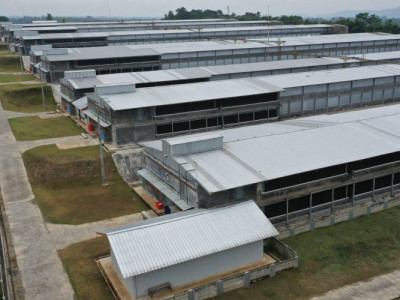
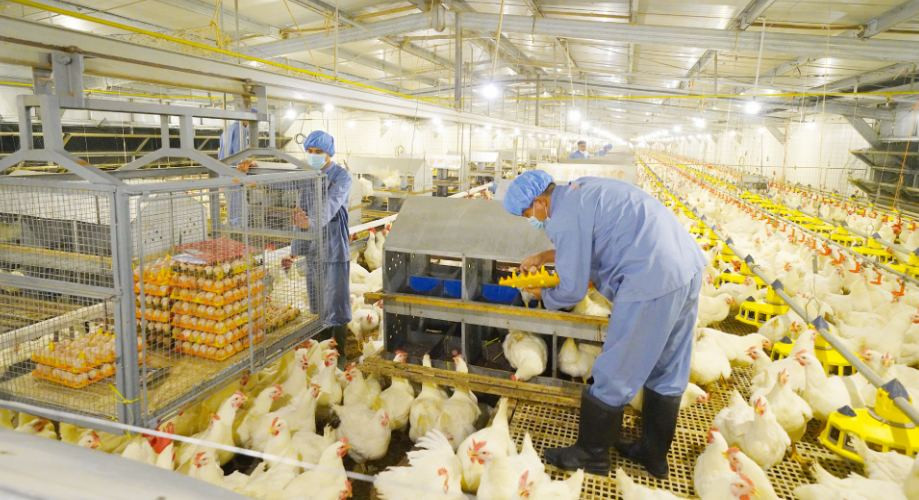
PT Japfa Comfeed Indonesia Tbk is one example of a company that contributes to strengthening national food security. As one of the largest agri-food companies in Indonesia, Japfa continues to expand its animal protein production capacity. In 2025, the company inaugurated an egg production facility in Bintan covering 7.6 hectares, with a capacity of 516,000 laying hens producing approximately 360,000 eggs per day. This capacity is targeted to grow to one million laying hens and 750,000 eggs per day by 2026, strengthening the animal protein supply, particularly in regions that previously relied on supplies from outside the area.
Japfa’s contribution to food security is also realized through improving the community’s nutritional quality. Through the JAPFA for Kids program, since 2008 more than 201,056 students across 1,214 schools in 105 regencies and cities have received nutrition education and access to animal protein. One of its initiatives, 1 Hari 1 Telur (One Day One Egg), demonstrates a tangible impact: in 2025, 646 of the 1,034 participating children (62.5%) successfully moved from poor to good nutritional status.
This experience shows that food security depends not only on increasing production, but also on efforts to ensure that people have access to nutritious food. Collaboration between the government and the private sector is key to building a resilient and sustainable national food system.
What Is Food Security and Its Four Main Pillars?
Food security is the condition in which food needs are met, from the nation down to the individual, reflected in the availability of food that is sufficient in quantity and quality, safe, diverse, nutritious, evenly distributed, affordable, and consistent with religion and culture, so that people can live healthy, active, and productive lives on a sustainable basis.
This definition is aligned with the FAO framework, which rests on four pillars: availability, access, utilization, and stability. In essence, food security does not stop at how much food is produced, but also considers whether that food is affordable, nutritionally absorbed by the body, and consistently available over time.
Indonesia’s food security depends heavily on the availability of animal protein. This is not merely a question of how many tons of meat, eggs, fish, and milk are produced, but of the production strategies, distribution, and policies that ensure both the community’s nutritional quality and national independence from import dependence.
The Benefits of Animal Protein and Its Long-Term Impact
Animal proteins such as meat, fish, eggs, and milk hold a biological advantage because they provide complete essential amino acids, heme iron, and important micronutrients such as vitamin B12 and omega-3. These nutrients are critical for preventing anemia and stunting in children. Unfortunately, public access to animal protein still depends heavily on purchasing power, so the highest prevalence of stunting is found among lower-income groups. Failing to meet these nutritional needs leads to reduced cognitive capacity and lower productivity in the future national workforce.
Main Sources of Animal Protein in Indonesia
1. Poultry: the backbone, thanks to a fast production cycle
Within the national supply, poultry and fisheries are the most reliable and affordable sources of protein. The poultry sector has achieved a production surplus thanks to its fast harvest cycle, although it remains vulnerable to price fluctuations in imported feed raw materials. Fisheries, meanwhile, hold vast sustainable potential from both the sea and aquaculture. However, public fish consumption is not yet optimal and still lags behind neighboring countries, due to distribution barriers and the lack of cold-chain infrastructure in various regions.
2. Beef: domestic production versus demand
A deficit of animal protein during the first 1,000 days of life is strongly correlated with stunting. The 2024 Indonesian Nutritional Status Survey (SSGI) recorded that the national stunting prevalence fell to 19.8% from 21.5% in 2023, with a National Medium-Term Development Plan (RPJMN) target of 14.2% by 2029.
Unlike poultry, domestic production of beef and milk faces a wide deficit and remains heavily dependent on imports. The root of the problem is structural, encompassing the animals’ long biological cycle, the dominance of small-scale smallholder farming, and low livestock productivity per capita. To respond to the surge in demand and support government programs such as Free Nutritious Meals, strong upstream intervention is needed, from importing breeding cattle to improving facilities and genetics, in order to transform import dependence into long-term supply self-sufficiency.
3. Fisheries and marine products: contribution and aquaculture potential
The advantages of fish as a protein source are quite clear: a high diversity of species, availability throughout the year, prices that are cheaper than most other animal proteins, and a richness in long-chain omega-3 that land-based livestock do not possess.
However, its utilization is not yet optimal. National fish consumption in 2024 was recorded at 58.76 kg per capita per year, slightly below the target of 59 kg set by the Ministry of Marine Affairs and Fisheries (KKP). In daily terms, Indonesia’s fish consumption is only 62.3 grams per capita, far behind Vietnam’s 94 grams. The main barriers are distribution and the cold chain: supply disparities between regions, especially in disadvantaged, frontier, and outermost (3T) areas, make access to quality fish highly uneven.
This is where aquaculture holds the key. Unlike capture fisheries, which are limited by stock carrying capacity and threatened by overfishing, aquaculture can be scaled up without damaging natural stocks, provided it is supported by superior seed stock, efficient feed, and adequate cold-storage infrastructure.
4. Milk and processed products: challenges and the opportunity of domestic fresh milk (SSDN)
Milk is the commodity with the widest gap between need and production capacity. On the consumption side, Indonesian milk consumption is around 16.27 kg per capita per year (BPS, 2020), far behind Vietnam (around 20 kg), the Philippines (23 kg), Thailand (44 kg), and Malaysia (50 kg). The FAO consumption standard stands at 30 kg per capita per year. The government has set a realistic, gradual target: raising consumption to 20.1 kg per capita per year.
On the production side, Domestic Fresh Milk (SSDN) is currently able to supply only about 20% of the total raw material needs of the dairy processing industry; the rest is imported. The Indonesian Dairy Blueprint 2013-2025 had in fact targeted SSDN to meet 60% of national needs by 2025.
The Ministry of Agriculture estimates that the national need for fresh milk in 2029 will reach 8.5 million tons, comprising 4.9 million tons of regular demand and 3.6 million tons for the Free Nutritious Meals program. This is a guaranteed market that, if met with upstream investment, importing breeding dairy cattle, improving genetics, applying good farming practices, and strengthening dairy cooperatives, can transform import dependence into self-sufficiency.
Food Security in Indonesia
How does Indonesia stand in measurable terms? One international reference is the Global Food Security Index (GFSI) compiled by Economist Impact. In the 2022 GFSI, Indonesia ranked 63rd out of 113 countries with a score of 60.2 points, placing it in the “moderate” category, up from a score of 59.2 the previous year. This score shows progress, but still leaves a gap relative to other upper-middle-income countries in the region.
An indicator closer to everyday life is the prevalence of stunting. The 2024 Indonesian Nutritional Status Survey (SSGI), released by the Ministry of Health in May 2025, recorded a national stunting rate of 19.8%, down from 21.5% in 2023. This means that around 4.4 million toddlers still experience stunting.
This downward trend is to be welcomed, but its pace is not yet fast enough: the government targets 14.2% by 2029 and 5% by 2045. To achieve this, the decline must be accelerated, and the intake of affordable animal protein is one of its levers.
Government Programs for Food Security
The availability of animal protein is not determined by farmers alone; it is driven by public policy and multi-stakeholder cooperation. The determining factors include feed prices, access to capital, import governance, animal health status, and the speed at which research reaches the barn. The following four policy areas serve as the main pillars for achieving the target of animal protein self-sufficiency.
1. Feed Subsidy and Financing Policy (KUR)
Feed costs are still influenced by global price swings because some raw materials are imported. The government has responded by encouraging the absorption of local corn and developing research into alternative feed such as BSF (black soldier fly) maggot. On the financing side, the People’s Business Credit (KUR) offers low interest (a maximum of 5%) and waives additional collateral for loans of up to IDR 100 million. Going forward, adjusting the scheme to better suit the characteristics of the livestock business cycle, which differs from the trade sector, will further expand its benefits for small-scale farmers.
2. Trade Regulation, Biosecurity, and Quality Standards
Trade: Simplifying and accelerating the import licensing process plays an important role in maintaining the stability of meat supply and prices, while continuing to prioritize the protection of local farmers.
Biosecurity: Managing the foot-and-mouth disease (PMK) outbreak has become a valuable lesson for strengthening the national animal health system. Routine vaccination, farmer education, and cross-sector collaboration are key to sustaining disease control.
Quality Standards: Veterinary Control Number (NKV) certification, halal certification, and the implementation of the cold chain are prerequisites for local products to be absorbed by the modern market, the Free Nutritious Meals (MBG) program, and export markets. Providing the support farmers need to meet these standards is a shared agenda.
3. Public-Private Partnership (Nucleus-Plasma)
To optimize fiscal resources, the government encourages participation from large-scale private investment, such as the livestock zones in Sukamara and Brebes. The appeal of this investment is reinforced by market certainty (an off-take guarantee) through the MBG program. So that the benefits are felt broadly, stronger regulation and mentoring of nucleus-plasma partnerships are needed to ensure a balanced sharing of roles and risks between the nucleus company and the plasma farmers.
4. Support for Research and Technology Transfer
Increasing productivity, for example in smallholder dairy yields, is heavily influenced by the level of technology adoption in addition to genetic factors. Institutions such as BRIN (the National Research and Innovation Agency) focus on genetic improvement, reproduction, and feed. The effectiveness of this approach is evident from the US-Indonesia Dairy Partnership (2024-2025), in which improved management practices raised daily milk production by up to 32.5%. The follow-up agenda is the downstreaming of innovation, namely ensuring that research results reach the farmer’s barn through a sustainable extension and funding system.
These four pillars are mutually reinforcing. Financing works best when supported by a strong animal health system; investment develops in step with regulatory certainty; and research has an impact when farmers have the capacity to adopt it. For this reason, animal protein security depends heavily on policy coordination.
Food Security Challenges in Indonesia’s Animal Protein Sector
National animal protein production rests on a fragile foundation, due to four mutually interlocking problems:
- Dependence on Imported Feed: Feed accounts for 60-70% of production costs. Although corn is in surplus, soybean meal (SBM), which makes up 25% of poultry feed, is almost 100% imported (around 5.5 million tons per year). As a result, production costs are highly vulnerable to global weather (El Niño) and changes in import regulations.
- Disease and Zoonosis Threats: Outbreaks such as foot-and-mouth disease (PMK, 2022) damage the long-term productivity of millions of livestock. There are also threats of cross-species diseases (avian influenza, anthrax) and the risk of antimicrobial resistance (AMR) from the uncontrolled use of antibiotics by farmers.
- Cold-Chain Infrastructure Deficit: Cold storage facilities are very limited and concentrated in Java and major cities. This drives a high rate of product spoilage (up to 20%) and nutritional disparities, in which 3T (disadvantaged, frontier, and outermost) regions struggle to access quality fresh meat, milk, or fish.
- Environmental Burden: The expansion of production triggers new problems: overfishing at sea (30% of catch areas in decline), pollution from livestock waste, high greenhouse gas emissions, and large volumes of food waste, which accounts for 40.91% of national waste.
Five Strategies to Increase Production
To overcome the challenges above, simultaneous intervention from upstream to downstream is needed:
- Genetic Improvement and Feed Management: Using reproductive technology (artificial insemination and embryo transfer) from research institutions such as BRIN, combined with feed-management training that has been shown to raise daily milk production by up to 32.5% without having to replace the livestock.
- Zoning and Strengthening Small Farmers: Organizing small-scale farmers (3-5 head) into corporations or cooperatives. The zoning model with a nucleus-plasma pattern ensures that smallholder farmers gain access to financing, technology, and market certainty without losing their bargaining position.
- Diversification with Local Alternative Feed: Reducing SBM imports by scaling up proven local feed, such as palm kernel meal (PKM), BSF maggot, and fermented agricultural-waste feed, which have been shown to cut feed costs by up to 30%.
- Optimizing Extension Services and Animal Health: Overcoming vaccination refusal in the field through communication and education, expanding the reach of animal health centers (puskeswan), adding veterinary medical personnel, and tightening oversight of antibiotic use.
- Investment in the Cold Chain and Processing: Building cold storage, refrigerated containers, and processing facilities through public-private partnership (KPBU) schemes. This is critical for reducing food loss, extending shelf life, and reaching consumers in 3T regions.
Why Is the Private Sector’s Role Critical?
The state sets the direction and provides the safety net, but most of the food consumed by the public is produced, processed, and distributed by business actors. This is why the private sector’s role is critical: not to replace the government, but to complement capacities that the public budget cannot bear alone.
Consider the government’s nutritious meals program, which now reaches more than 60 million beneficiaries. This creates a surge in protein demand on a scale that can only be met by a reliable supply chain. The eggs, chicken, and fish that enter the government’s nutritious meal menu must be produced consistently, safely, and at affordable prices, a demanding logistical and production task. Structural demand of this kind underscores one thing: without close partnership with the food industry, national nutrition targets are difficult to achieve on time.
The private sector also brings three contributions that are difficult to replace: large-scale production capacity that supports the availability pillar; distribution networks that extend access even to remote regions; and research and technical guidance that improve the productivity of small farmers and fishers. When this capacity is combined with government policy, the impact multiplies, as reflected in Japfa’s support for national food security and sustainable economic growth.
Frequently Asked Questions (FAQ)
Food security training programs for local livestock and aquaculture farmers
For livestock farmers, Japfa runs structured training through a nucleus-plasma partnership scheme that covers more than 8,700 partner farmers (2025 Sustainability Report). Japfa supplies day-old chicks (DOC), feed, medicine, and mentoring, while farmers receive hands-on training (learning by doing) with an evaluation after each harvest, comparative study visits between barns, and support from Field Extension Officers (PPL) at least twice per production cycle. This support includes digitalization through the CCF Recording application, an increase in training duration of more than 90% in 2025, recommendation letters to banks for access to capital, and Teaching Farm facilities together with Universitas Gadjah Mada (UGM), Universitas Brawijaya (UB), Universitas Syiah Kuala (Unsyiah), IPB University, and Universitas Hasanuddin (UNHAS) for knowledge transfer.
For aquaculture farmers, Japfa’s aquaculture unit (PT Suri Tani Pemuka / STP) runs the KAVAS (Vannamei Zone) program for small-scale shrimp farmers, reaching more than 100 farmers: the farmers provide the ponds and labor, while STP supplies shrimp fry, feed, and technical guidance. Other training includes STP Mania Loyalty (“Fish Health and Feeding Strategy in Aquafarming”), the development of ATD field technology (aerators, GIS mapping, UV disinfection), biofloc training in Purwakarta and Lampung, the SAIL program that has involved more than 400 students since 2020, and STP Mengajar (STP Teaches) together with the IPB Vocational School.
Strategy to reduce dependence on animal protein imports
Japfa’s main strategy is the vertical integration of “feed to food,” producing protein domestically at every stage, from feed, breeding (DOC), and cultivation to processing, so that protein needs are met by domestic production rather than by importing finished products. Domestic capacity continues to be expanded through 15 feed mills, 79 breeding farms, 30 hatcheries, and new facilities such as egg production in Bintan (516,000 laying hens, 360,000 eggs per day, heading toward 1 million by 2026). For superior seed stock, Japfa breeds the Indian River strain (Aviagen) locally and adapts it to the Indonesian climate, thereby reducing dependence on imported breeding stock.
On the upstream side, Japfa is raising the local content of raw materials: in 2025, 65% of poultry feed raw materials and 43% of fish and shrimp feed raw materials came from local suppliers, and corn has been sourced domestically since 2017 in line with government policy. Self-sufficiency is also reinforced through PT Vaksindo, the only registered Indonesian private company producing PMK (foot-and-mouth disease) and LSD (lumpy skin disease) vaccines.
The company’s contribution to local food self-sufficiency
As one of the largest agri-food companies in Indonesia (ranked second in the feed and breeding segments), Japfa contributes to food self-sufficiency by providing affordable animal protein on a large scale from domestic production, distributed across the archipelago through traditional markets, modern retail, and online platforms. With revenue of IDR 60.7 trillion (2025) and a fully approach to industrializing livestock farming (ensuring traceability through NKV, ISO 22000, and HACCP certification), Japfa meets the protein demand of a population of more than 278 million, whose poultry consumption is still only around 8.6 kg per capita, leaving substantial room for growth.
Its contribution is broadened through inclusive growth and a collaborative ecosystem. More than 8,700 partner farmers, along with the KAVAS program for shrimp farmers, distribute production capacity to local communities with market guarantees and input, while new facilities such as Bintan strengthen the regional protein supply. On the nutritional-access side, the JAPFA for Kids program (reaching 201,056 children since 2008), 1 Hari 1 Telur (One Day One Egg), and Gemar Makan Ikan (Love to Eat Fish) improve protein access while reducing stunting. Japfa interprets food security as “building a resilient national ecosystem,” partnering with Bappenas (the National Development Planning Agency), the National Nutrition Agency (Badan Gizi Nasional), and the Center for Health and Nutrition Studies at the University of Indonesia, while supporting the Free Nutritious Meals program and the Indonesia Emas 2045 vision. As a private entity, its position is that of a complementary partner in the national food self-sufficiency agenda, not a substitute for it.